


Late Night Confrontation
I’m going to ask you to use your imagination for a moment.
Imagine you’re a college student, all of 21 years old.
As part of your classes, you’re taking an astronomy class, which requires you to go to the University Observatory once a week in the late evening for the Lab portion of the class; you are regularly coming home from the observatory around ten or even eleven o’clock at night.

You live a few miles off campus, in a small apartment you can just barely afford. It’s not the nicest part of town, but overall it seems not all that bad. Besides, you’re lucky enough to have your own, so commuting to the various parts of the college town you’re in is pretty convenient.
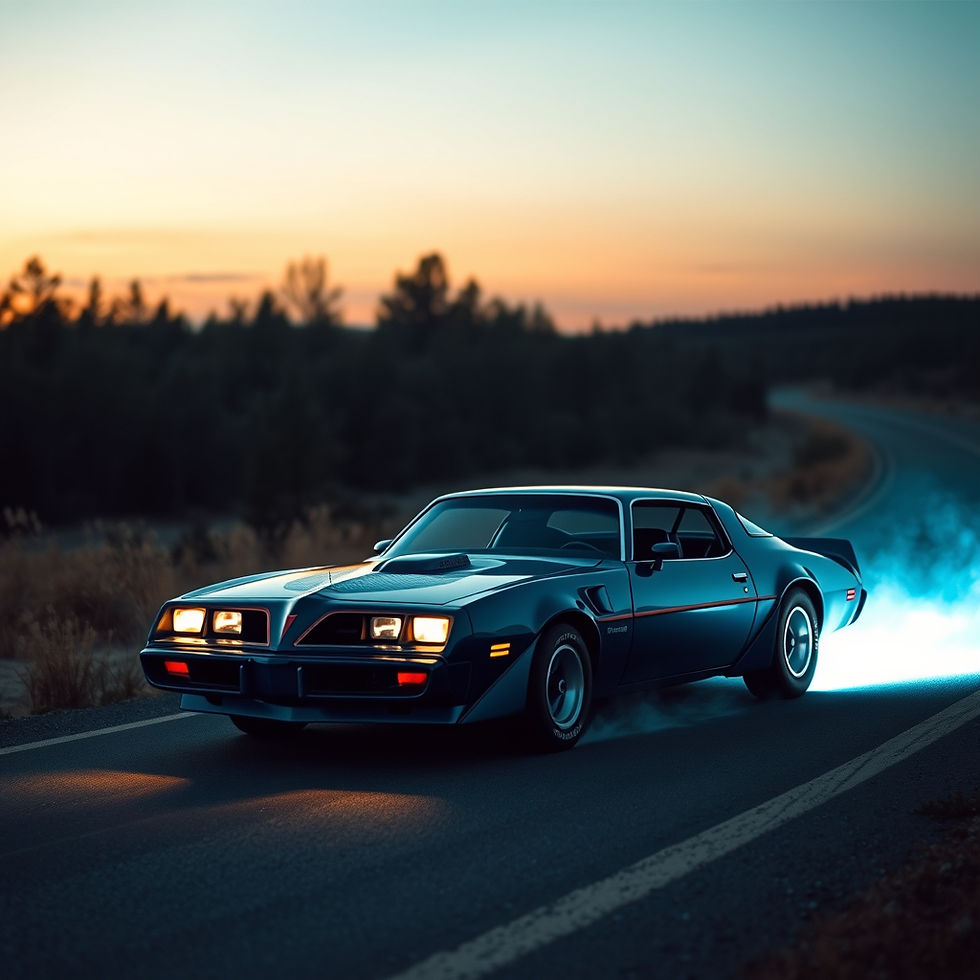
Now imagine you’re coming home from class one night…and your car just stops running. No cough. No stutter. Just all the lights on the dashboard coming on and the engine going quiet. You have enough momentum to roll the car into the parking lot of a small apartment building just off the street, but now you’re still over a mile away from home, it’s nighttime… so now what?
Many people in today’s world would say, “what’s the big deal? I pull out my phone and call a friend…. Right?”
Except this is 1990. Cell phones don’t exist; at least not for a college student counting pennies to make rent every month. You basically have two choices: sleep in your car in a part of town where crime isn’t rare, or walk home. Neither choice is optimum, but these are the cards you’ve been dealt. All-in-all, your apartment is closer to your location than any of your friends are.
So, imagine deciding to walk. The more you walk, the better you feel about the decision. It’s a quiet night, not a lot of traffic, and the weather is balmy. No rain, a comfortably cool high ‘60’s. The stars are out, and as you walk you look up at them and remember your time studying them through the Observatory’s telescope.
You’re walking down the street, less than a quarter mile from your apartment and you’re starting to feel like all’s going right in the world overall, your broken-down car notwithstanding…when you realize you’re about to pass by a bar that’s known to be a place you don’t want to be after sunset. The kind of place where they sweep up teeth and eyeballs after closing time.
As you approach the bar you see a group of individuals milling around a couple of cars, seven or eight of them. They’re rough-looking guys but they’re joking and laughing with one another and obviously having a grand time. Why would they trouble themselves with a kid barely out of their teens, walking down a mostly deserted street?
Then…things take a turn. One of the group gathered there spots you, he points you out to his companions… and the energy immediately goes dark and menacing. There is a verbal exchange you try to manage good-naturedly, but it becomes clear that you have just been promoted to the evening’s entertainment.
The individuals in front of you inform you that you will either have to give them money to pass, or you will suffer for it. You try to assure them you have no money – if you did, you’d have a car that runs, for one thing – and that’s when you see it.
They begin to move towards you, deploying an assortment of improvised tools of Mad Max mayhem as they come. Knives. Chains. Jack handles. Beer bottles are broken, becoming jagged, slashing and stabbing implements. It becomes clear, in that instant, that you are about to be attacked and brutalized, maybe murdered; certainly maimed. They spread out, cutting off any avenue of escape you might have been able to take advantage of.
The worst of it all is the look in their eyes. Those looks are not merely menacing… but gleeful. Excited. Lustful. These individuals don’t just look “rough” anymore; they look predatory. Subhuman. If vampires were real, these are the looks they would give you as they close the distance to rip the life out of you. For the first time you see the hard reality of the savagery of criminal predators: there is no morality in them. There is no respect for your status as a human being. It is the same look a cat preparing to disembowel a mouse gives it in the moment before the final pounce. You are prey.
Hold that in your mind for just a moment: that sense of horror in realizing that your life is in fundamental, profound danger, and your survival is very much in question.
So, let me ask you: what would you do under such circumstances?
Do you try to escape? No, they’ve cut off your avenues of flight.
Do you freeze? Scream for help? Beg for your life? Do you collapse into paroxysms of horror, crying, and blubbering?
I posed the above a short time ago to a person I know, and they asked me where in the world I could have come up with such a nightmarish scenario? I informed him that the scenario was a real-life situation I myself had experienced. I remember my friend’s face going a little gray, and they asked me – almost in a whisper – what had ultimately happened.
The fact is that what could have happened might have been truly horrific…except I was armed. It was, believe it or not, the first time I’d ever carried a gun on my person in public; mainly because I’d tended to keep it in a lockbox in my car when I went out into the world, but I hadn’t wanted to leave it behind when my vehicle broke down, so I’d gone ahead and threaded the holster I kept that gun stored in onto my belt. In 1990 New Mexico did not have a concealed carry law, but you could carry openly, so I somewhat self-consciously went ahead and buckled it on before beginning my walk home.
I couldn’t have concealed it anyway even if I’d wanted to; the influence of my grandfather – a career Southwestern lawman who’d experienced more than one gunfight in his career - had motivated me to make the first gun I bought for myself a large-caliber Smith & Wesson revolver, a gun not dissimilar to the iconic weapon Clint Eastwood had wielded so dramatically in the “Dirty Harry” series of movies; though mine was a 4-inch barrel instead of a 6-inch, and mine was a .41 Magnum instead of the iconic .44 Magnum Eastwood used. My grandfather had taught me about firearms safety and gun handling – to say nothing of the merits of an armed citizenry – from the time I was four years old.
In the uneven light of late evening, with sporadic street lighting, I guess my would-be assailants didn’t see the gun at first. Not surprising, considering they were on the left side of the street, so my right side was the side away from them as they began to attempt to surround me.
To be honest, when I realized I was in real danger the fight-or-flight adrenaline dump emptied my brain of the knowledge I was armed. Oh, I liked to go to the range and shoot, but I’d done little-to-no practicing of drawing a gun from a holster and engaging targets at what is now called “combat distance” and really hadn’t seriously pondered what I would do if confronted by criminals.
So, when real danger loomed, I found myself in a momentary brain freeze, and my first response was actually to take a step backwards, away from the danger…only to back myself into the wall of the business across the street from the bar.
That impact jolted me, but it also caught my gun butt in a way that drove it into my side; the rear sight poking me forcefully in the spot just under my ribs. That was enough to “reboot my CPU”, so to speak, and remind me that I wasn’t helpless or without options.
The gun came into my hand with surprising speed; it appeared in front of my eyes almost unbidden, and the results were beyond gratifying. I can only imagine what must have gone through the minds of my would-be attackers when their ostensibly “helpless” chosen prey suddenly produced a large handgun from out of nowhere, but their response was to immediately scatter like cockroaches when the light is turned on, jumping fences and vanishing with an alacrity that still seems surreal to this day…but not as surreal as the actions of the leader of the group.
The man actually froze in place for a split second, his eyes going so wide I briefly imagined them popping out of the sockets and dangling by their stalks on his cheeks, and he blew my mind when he suddenly cried: “That’s not FAIR!” in a tone of childishly petulant outrage before himself spinning away and running for his life.
To this day I think about that and laugh a little. Seven or eight against one, all of them armed with deadly weapons against what they’d assumed was an unarmed and helpless victim…and that was somehow “fair”?? Then I think about what might have happened to me if I hadn’t had that gun on my hip, and suddenly I don’t have a lot of motivation to laugh anymore.
I learned a powerful lesson that night: monsters – real, diabolical monsters – are out there, and they are utterly devoid of basic humanity. They have no problem whatsoever in brutalizing people; in fact, many take pleasure in the suffering and misery of others. Oh, there are those who commit crimes not because they take any joy in it, but because they get a measurable benefit out of robbing and stealing from those unequipped mentally or emotionally to resist them and that makes it worth it to them, but the genuinely savage societal predators are out there too.
My grandfather had tried to teach me that reality, but it’s hard to wrap your mind around it until you experience it for yourself.
I did have an advantage: when my father retired from the military, he brought my mother and I to live with her parents in Santa Fe, NM while he looked for property to buy and build a house on. My mother wanted to be near her parents, and my father wanted to see it happen. The end result was I spent quite some time with my grandparents. My parents had me late in life, so my grandparents were from an entirely different era, growing up in the ranching and farming communities of New Mexico in the early 20th Century. My grandfather had learned about guns from an early age; not as a hobby but as a necessary skill to assist his family in putting game into the family stewpot. His grandfather had started teaching him at 4 years of age, and he was a competent hunter and gun handler by the time he was 6.
He bought his first handgun when he was 11, having spent the prior year working every odd job he could to put money together on the promise from his father that he would match every dollar his son managed to raise himself. So, my grandfather walked into the local hardware store on his birthday and bought an old and blue worn – but still fully functional – Colt 1873 single action in .38 Winchester Central Fire (later known as .38-40). He would spend the next couple of years learning how to use the spent brass to “roll his own” cartridges, replacing the primers with fresh ones, filling the cases with appropriate levels of powder, and seating fresh bullets in the case. It enabled him to shoot far more than he would have been able to if he’d just used store-bought cartridges…and he developed an impressive level of skill as a result. When he became a police officer later in life, he quickly demonstrated a superior ability that made him the best shot in the agency…and in those relatively lawless times of the 1930’s – less than a quarter century of New Mexico becoming a state – he ended up victorious in multiple gunfights against criminals and murderers.
When his daughter and her husband moved into his home, along with their precocious son, my grandfather found himself delighted to become a mentor. Freshly retired, he took an outsized role in my childhood, teaching me the things he felt every child needed to learn to become a good citizen and a contributing member of society…and to his way of thinking, being a competent gun handler was just one facet of that.
My grandfather, in fact, was not my only mentor. I joke that I had an embarrassment of riches in terms of adult role models, and it’s true. My father himself was a product of what many call “The Greatest Generation”; he’d grown up in Chicago during Prohibition and the Great Depression, and answered the call of service when the conflagration of World War II ignited, becoming a fighter pilot that flew missions in both World War II and Korea, and later a test pilot with a large role in the development of several successful platforms of military aircraft, including the F4 Phantom II.

And it wasn’t just family members either; every Saturday my grandfather’s friends – seasoned law enforcement officers and gunfight veterans themselves – would come over to the house for fellowship and camaraderie, and I spent many joyful hours playing on the carpet in the middle of the room while these salty and hardened men socialized. I learned from them all and came to love them like family…and learned some hard lessons from them as well. While the conversations were often nothing but the good-natured ruminations of old friends enjoying each other’s company, they did often range into talks of their law enforcement experiences and the more violent encounters they’d endured.
Every one of them, some long retired from wearing a badge, still habitually carried the guns that had saved them from violent death during their careers. They’d engage in good-natured debates about the merits of one type of handgun over another, and which caliber was best suited as a “manstopper”. They were also incredibly accommodating and patient when I chose to ask questions, only encouraging me to learn more. On numerous occasions I even was taken along when they decided to head out into the hills of New Mexico to engage in impromptu target practice, and to give their youngest adopted member pointers in how to be competent (and safe) as a shooter.
It was the contributions of these people to my life that put me in the position I was in on that darkened street in 1990. They instilled in me respect for the idea of an armed citizenry, and I shiver at the thought of what might have happened if I hadn’t had that gun on my hip when I realized predators had chosen me as their prey.
I have been habitually armed ever since. On two separate occasions later in life that habit again spared me from pending criminal assault. I never had to fire a shot, but I was mentally prepared to, and that preparation was a big reason why criminals backed down. My grandfather once told me that the more willing and committed you are to doing whatever is necessary to survive and prevail – including using deadly force on those who would seek to harm you, if necessary – the less likely it is you’ll ever need to take that next step. But never be afraid to commit to that next step should you be pushed far enough.
It was my experience being mentored by such men – getting to know them and learning the lessons they had to teach – that often informs my writing. I admired those men, and in my own way seek to keep their memory – of who they were and what they brought to the world – alive and vibrant through the telling of stories about people with the same qualities that made those men special.



Comments